Industry News & Insights | March 20, 2026
Helping our students during times of international unrest.
Provost Pathways & Possibilities
By Provost Carr-Chellman
Helping our students during times of international unrest: During this time of conflict, it is important for us to support our students in coping with worries, concerns, anxiety, and stress. Faculty can serve as essential and helpful contacts for good strategies to handle the kinds of feelings that students may have during these difficult times. While Pace has resources to help with issues of emotional challenge, and we review many of those below, faculty have many opportunities to connect with students, talk about issues, and give opportunities to process our feelings as an entire university community. This month, I’m pausing our series on signs of progress to share ways we can help our students in this difficult time.
International conflicts feel both far away and all too close, but they also feel entirely out of our control. One of the things that is so difficult about these kinds of conflicts is that we do not feel agency over what’s happening daily and what is taking our attention.
Are the Kids All Right? Maslow’s hierarchy of needs suggests that we need to have certain needs met in order to learn or pursue self-actualization and self-fulfillment. Human flourishing takes place at this highest level of personal growth. This is what our students come here seeking, but they can’t achieve those needs while they are hungry, sleepy, feeling unsafe, or helpless. In the hierarchy, the need for safety and security must be met before we can learn or grow. International conflicts interfere with our ability to focus on learning and rob us of our feelings of safety and security.
A Dialogue with Jeff Barnett: Where should we seek out answers on how to help our students? Of course, we need to talk with our outstanding Vice President for Student Affairs and Dean for Students.
AACC: Jeff, can you share with me right off the top some specific services, tools, and assistance that our students can access that may help them to deal with the issues they're facing in this time of international conflict?
JB: Absolutely. There are numerous support systems, units, and resources for students, to support them through a variety of challenges. Here are just a few:
- Counseling Centers: Mental Health and wellbeing support for student dealing with the challenges of everyday living or more acute needs/concerns. We provide 24/7/365 support for students.
- Dean for Students Office & Student Support Services: A first stop-shop to provide care and support to students through a wide variety of challenges. These include emergencies, sudden personal/family-related concerns, extended absences, University and community resources and referrals, and support navigating University support.
- Residential Life team Our team of Resident Directors (RDs), Resident Assistants (RAs), Assistant/Associate Directors (ADs) are available and on call at all hours to support resident students in any way they need.
- Commuter Student Services: Specialized and dedicated engagement and support for commuter students.
- Pace International Students & Scholars (ISS): Counsel and support for challenges specific to International Students, Study-Abroad students, and OPT alumni.
- Guardian Reports: When in doubt, faculty and staff should submit a Student of Concern (SOC) report on Guardian which will be routed to the appropriate University officials.
- Employee Assistance Program (EAP): The Employee Assistance Program (EAP) provides cost-free professional consultation and referral services for university staff and faculty who are experiencing work and personal-related difficulties. Services are available to members of the employee’s household.
AACC: How should faculty approach these issues in the classroom? I know that we have to maintain some cautions there, can you talk me through that from the Student Affairs perspective?
JB: Our faculty and staff are among the most caring and supportive of any institution I have experienced. Faculty are classroom and pedagogical experts, and I defer to them and the academic administration for their expertise. But, from a Student Affairs perspective, I would offer that it could be helpful to create space for listening to student concerns in group and individual settings. It's also equally important to acknowledge that we are a scholarly institution devoted to and anchored by creating and sharing knowledge. In that sense, the classroom is a prime space for examining and understanding how global events might impact the study of a particular topic, discipline, or profession. We shouldn't feel compelled to take on or articulate a particular political or global perspective unless it aligns with a scholarly theory or line of research (i.e., Critical Race Theory, Phenomenological Feminist Perspectives, Grounded Theory research, etc.). View-point neutrality, questioning, and academic debate in the classroom is an important art that can still be powerful.
AACC: I know there are some issues we might not want to ask faculty to take on. What are some signals that they need to consider making a referral?
JB: Our faculty and staff are brilliant! We know so much about so many things. But we cannot be experts at all of them. We should be careful to avoid the trappings of our own intellectual curiosity in certain circumstances. In other words, when a student's situation creates discomfort or uncertainty as to how to provide help or proceed, please do not hesitate to refer them to the experts listed in the offices above. Folks need not take on more than they are comfortable with. And even if folks have deep scholarly knowledge, professional experience, and/or comfort dealing with certain types of matters, it is still important to bring in designated campus partners to ensure that the full weight of university support is brought to bear. We want to be sure to avoid creating streams or structures outside of existing processes and procedures. Sometimes the referral is a "pass-off," and other times we need to all work as partners in the joint care of our students. Still, I have witnessed the creative approaches and power our faculty have employed in support of our students and encourage folks to initiate those pathways in collaboration with offices, staff, and units that can help elevate those support mechanisms.
AACC: Have you had similar experiences in the past? If so, what do you think will be the biggest challenges we'll face as we work with our students during this difficult time? If not, what are you anticipating?
JB: Inside and outside the classroom, we are always supporting students through a multitude of natural, national, and international events that impact our students. Two lessons tend to stick with me: 1) Remembering that whenever something happens anywhere in the world - even far from home - there is very likely a Pace student (or colleague) that may be impacted; 2) Because of that, and for other reasons, difficult times persist. That is, our students (and we) are constantly grappling with various seen and unseen challenges. I think our humanity and sense of community are our greatest strengths to support students and each other as we all traverse the increased frequency, clustering, and acuity of world events.
Industry Newsflash
By Provost Carr-Chellman
This ongoing column in the Provost Newsletter tracks current news in the Higher Education Industry. Links are included to news sources, like the Chronicle, for your exploration. Some of these are innovations, or new practices that may inspire, while others will be related to the overall national challenges that higher education may be facing. I hope the highlights will be helpful as we continue to work through our transformation efforts:
- CUNY grads are struggling to find jobs. The barriers and recommendations in the article could be a playbook for future success.
- Updated numbers on international student visas indicate much worse drops than originally thought.
- Impacts of the strikes in the Middle East on higher education campuses up to date reports from the Chronicle can be found here and you can read about impacts on those stranded here.
- The New School is downsizing by 7% with a 15% cut in faculty and staff due to shrinking enrollments and Portland State is cutting programs in response to enrollment downturns. University of Providence (Montana) declared financial exigency in December and is bracing for program cuts.
- The Times is reporting changes in professor’s teaching and research behaviors in response to concerns for federal government monitoring.
- States (Colorado & California) are proposing remedies for federal cuts to minority-serving institutions.
- The US Department of Education is making it easier to become an accreditor and for institutions to change accreditors.
- ACE (American Council on Education–Higher Ed’s primary conference for leaders) turned out some news from their conference last week:
- Discussion of political relationships
- ACE President, Ted Mitchell, called for both changes in higher education and defense of its independence.
- Undersecretary of Education, Nicolas Kent, addressed ACE with warnings
- Student loan limits on certain fields are getting some pushback which could open more federal loan funding for fields like nursing, education, architecture and business.
- Academic Freedom is being re-defined by the University of North Carolina.
- Iowa joins Indiana and Ohio in cutting underenrolled programs. University of Iowa (UI) is cutting 7 degree programs including 6 undergraduate programs and 1 master's program in areas like languages, gender, women’s and sexuality studies, physics and African American studies.
- Faculty Growth Club, anyone? I found this supportive innovation interesting, what do you think?
Faculty Spotlight
English Department Wins MLA Pathways Step Grant
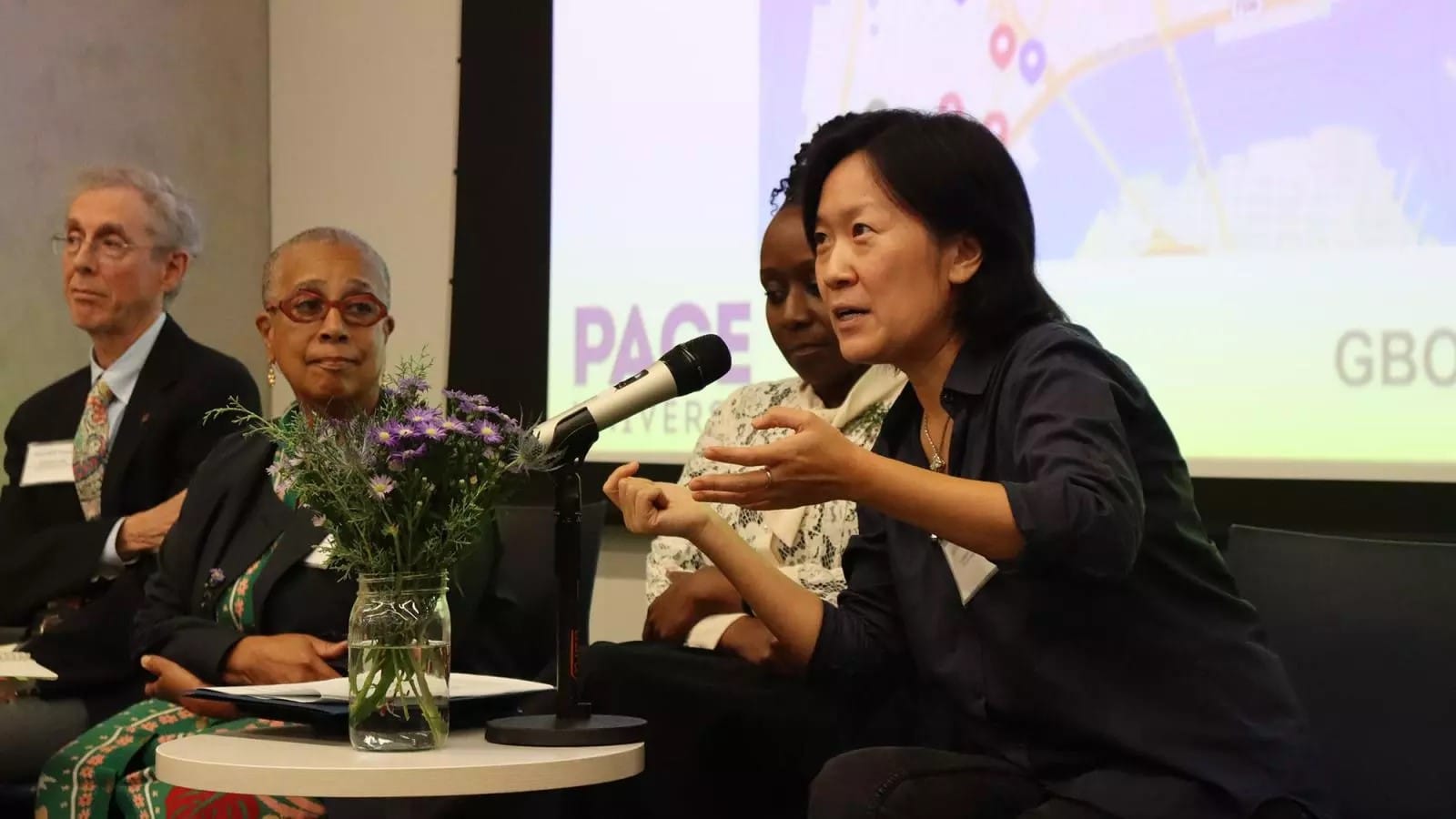
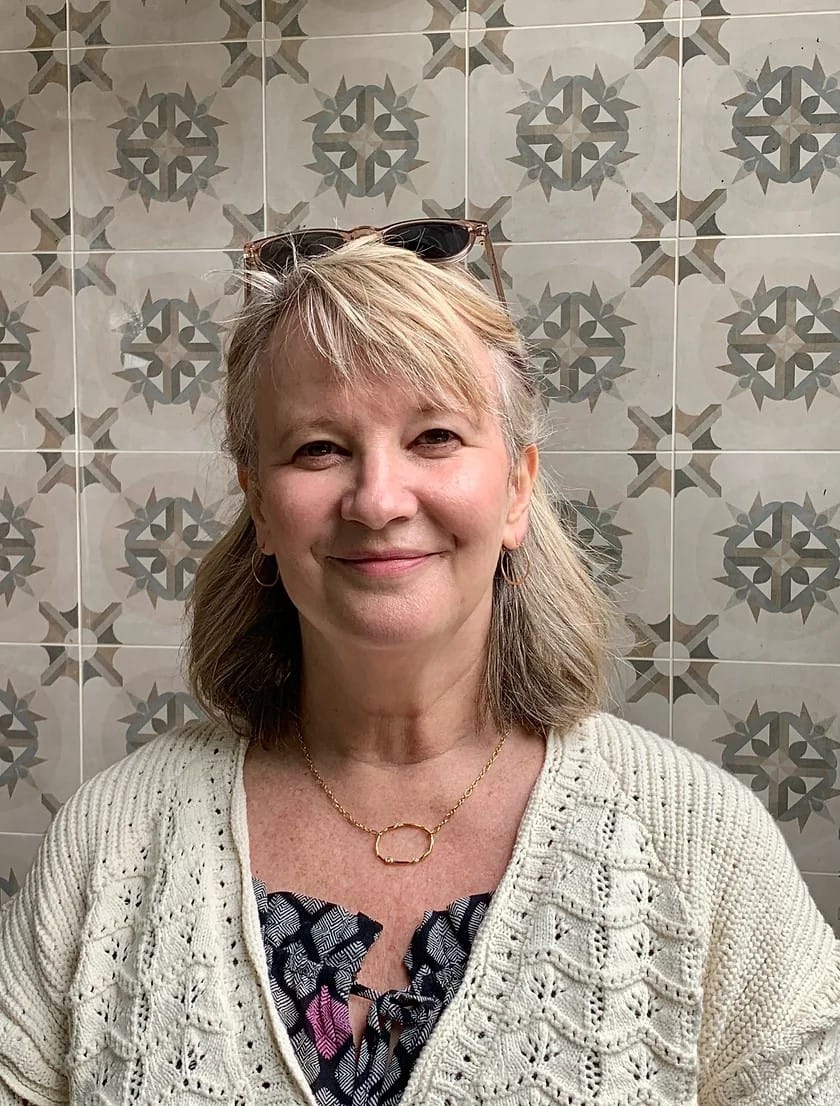
Left: Dr. Stephanie Hsu speaking at the launch of The Ground Beneath Our Feet (GBOF), a program funded by the National Endowment for the Humanities (NEH), Right: Dr. Sid Ray
The English Department is pleased to announce that Dr. Stephanie Hsu and Dr. Sid Ray have received a $10,000 MLA Pathways Step Grant to support Pace University’s partnership with Cosmic Writers, a nonprofit offering creative writing enrichment for K–12 students.
The program brings secondary school students to Pace’s NYC campus while providing paid experiential learning for English majors who serve as teachers, curriculum developers, and administrators. Special thanks to Sarah Cunningham for her generous support and to Cosmic Writers’ founder, Rowana Miller, who is partnering with the department and teaching this semester.
As part of the grant, Dr. Hsu and Dr. Ray will participate in National Humanities Alliance training and attend the 2027 MLA Convention. This award strengthens Pace’s ongoing commitment to fostering vibrant humanities programming.
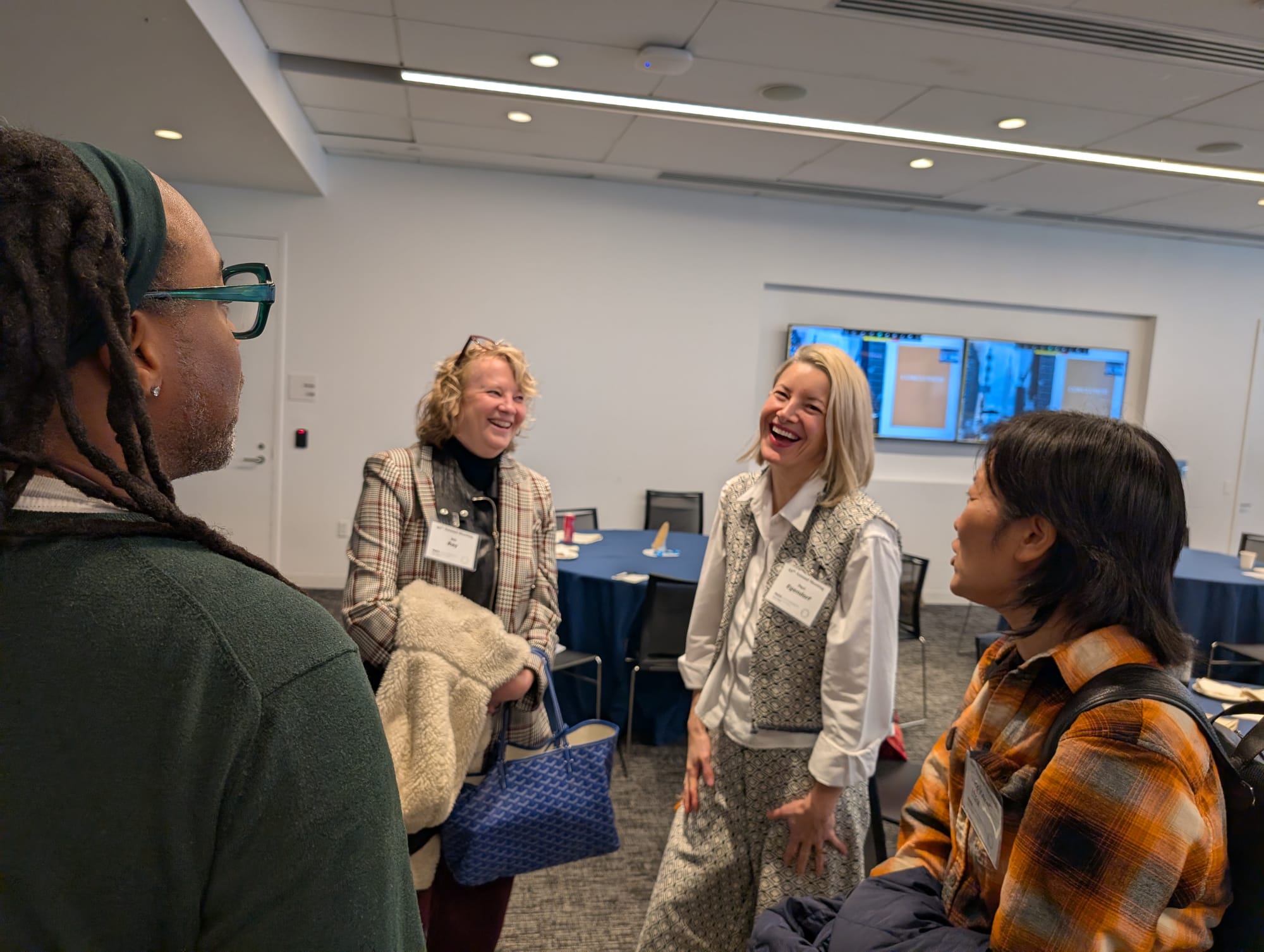
Sid Ray and Stephanie Hsu with with Assistant Professors Perl Egendorf and Brandyn Heppard from the Society of Fellows conference on Sunday, March 15, 2026.