Industry News & Insights | February 27, 2026
Common App research reports that we should be considering something a little more nuanced in regard to the label “first generation” & more industry updates.
Provost Pathways & Possibilities
By Provost Carr-Chellman
As I move into the Provost position, I plan to share thoughts and reflections with you, the Pace academic community, on a regular basis. I want to consider the work we’re doing in the Provost’s office, the ongoing transformation processes we’re engaging in, the future directions for our work, and reflections on our shared experiences. I believe this will contribute to increased transparency and connection between my office and the daily work of our faculty and staff. I would love to hear from you with any reflections on these ideas and hope it will spark engagement and dialogue. I invite your participation in the conversation and hope these authentic reflections invite you into further connection with my office.
Arrival: It’s been a little more than a month since my arrival (1/20 was my first official day though plenty of early work happened before that). During this time, I have had the opportunity to tour the facilities at our three locations, meet with many faculty, staff, students and leaders across our institution and have been listening—a task that is really just beginning. I have had the honor of observing and engaging our shared governance through attendance at Faculty Council meetings, and I’ve been able to visit undergraduate classes. Of course it is always a challenge to be, as so many have said to me over the past few weeks, “drinking from the firehose” of information, but for me learning about Pace has been wonderfully energizing and interactive. I send deep appreciation to each of you who have taken time to illuminate the various corners of Pace and help me continue to see an increasingly complex and varied picture of this amazing institution. I can say, with confidence, that the blurry picture that is coming slowly into focus for me is one of a dedicated group of professionals who care deeply about our mission and daily work and who want to make a difference in the lives of our students. We share this dedication, and I am feeling increasingly at home here with clear alignment of purpose.
What I’m hearing and learning: First, and foremost I have been learning what an amazing institution Pace is. Our people are resilient, our students are bright and dedicated, our faculty are intellectually gifted and devoted to our mission, our leaders are strong, empathetic, and respectful of shared governance principles. More than once, I have heard people refer to a “small but mighty” institution with a powerful mission. I have also heard about the experience of transformation that we are engaging. There is a clear and resounding reflection that we are in a time of great change. Generally, I believe change can make organizations stronger, and I am convinced that this will be the case for our transformation. Knowing that others in our industry are sharing in this rapid change experience is reassuring (something about having company) but it doesn’t alleviate the anxiety that comes with facing specific impacts on our institution and our individual lives. Concerns that have been voiced to me have not gone unheard. Rather, those worries have caught my attention. I know that there is concern for how we will adjust to budget cuts, PIVOT changes, leadership shifts, and new responsibilities. I am hearing that the impact of these issues is leading to change fatigue, but I also hear overwhelming confidence in our ability to come through this with success and to emerge a stronger, more sustainable institution with increased resilience.
As a newcomer, I have some insights from fresh perspective taking, and lessons learned from similar past experiences. Right now, I’m more likely to ask, “Why do we do it that way?” than almost anything else. The answer to that question is very important and most of the time the answer is grounded in our mission, our identity, our relative value proposition. Rarely, the answer has been tradition, or, “because we’ve always done it that way.” Those instances are opportunities for me to ask whether we could reconsider the way we approach some areas. This perspective doesn’t mean that I have quick solutions to the depth of emotion that rapid change brings. But I do feel that transparent communication, empathetic support, and celebrating small wins are good first steps.
Progress: From what I have learned so far, there is evidence that we are making progress. Yes, it is slow, and we will see it emerge over time on a long horizon. Changes in retention, core curriculum, Pleasantville revisioning, artificial intelligence, academic planning, efforts to increase yield, advising, scheduling tools, partnerships, and Carnegie designations are all examples of progress. Each month I’ll unpack another space where we can see that the large ship is starting to turn. I am inspired by these examples of positive outcomes from the hard work that we have undertaken together. First out of the gate, demonstrated increases in retention. To help us know more about what’s going on in retention, I’ve asked Kelley Kreitz to dialogue with me about this area:
****
AACC: So, Kelley, I understand there have been some pretty impressive early signs that our retention efforts are paying off. Can you tell me about the statistics and what you think has led to this improvement?
KK: First-to-second year retention for the Fall 2024 cohort increased to 78.2%, up from 75.5% the prior year, with gains across campuses, schools, and key student segments. Summer melt declined by 4%, reflecting stronger onboarding and advising coordination. These improvements follow the implementation last May of the new first-year advising model, stronger coordination between advising and schools through the implementation of a holistic advising model for all students, and increased collaboration with Student Affairs and Enrollment Management.
AACC: That’s pretty amazing, truly a great early sign of success. I also feel that we have a moral imperative to help students that we admit to make the most of the opportunities that Pace is offering to them. What’s next in the process?
KK: This spring, the focus shifts from stabilization to structural improvement. For us, that will include a number of specific tactics and activities including:
- School-Based Retention Analyses: Associate Dean of Student Success and Retention Strategies Elizabeth Colón is completing targeted analyses by school to identify discipline-specific barriers and intervention points.
- Data in Annual Program Review: Retention and progression metrics are being embedded directly into annual program review dashboards to strengthen accountability and align academic planning with student outcomes.
- Academic Recovery in UNV 101: A new, pilot academic recovery initiative, led by Assistant Director of Advising and Retention Programming Christina Bartelli, launched this semester for students with identified academic needs, to provide structured skill development and early intervention.
- Major Mapping & Curriculum Planning: Liz Colón and Senior Assistant Dean and University Advising Lead Heather Calchera, will meet with department chairs to develop clear major maps, improving sequencing transparency, reducing registration friction, and strengthening progression planning.
- First-to-Second Year Handoff: We are formalizing the transition from first-year advisors to school-based advisors to ensure continuity, proactive outreach, and early identification of students at risk in year two.
- Collaborations with the Learning Commons in Targeted Courses: We are also beginning to work with deans on identifying the courses that are common barriers to advancement for students. Learning Commons Director Dan Buffone and his team will pilot bringing embedded tutoring and other supports to these courses to increase student success.
- Preventing Summer Melt: We are reconvening the cross-divisional collaboration among Student Affairs, Enrollment Management, and Advising that led to last summer’s 4% melt reduction. We will work to replicate and strengthen that coordinated outreach, onboarding, and monitoring strategy for Summer 2026.
AACC: That’s amazing, I love that we have very specific ways that we are implementing and institutionalizing the retention measures we’re taking. Are there ways that everyone can help?
KK: Absolutely. The most immediate way faculty can help is by completing Academic Progress Reports through OnTrack in Week 5 (starting February 23) and Week 9 (starting March 23). Timely, candid feedback gives advisors actionable insight while there is still time to intervene. That early visibility is one of the most effective tools we have to support students before small challenges become larger barriers. Faculty can also log into OnTrack at any time to share attendance or academic concerns. (From the dropdown menu in the top left, choose Students, then My Students.)
I also want to thank the faculty who participated in the Fall 2024 and Fall 2025 first-year seminar pilot initiatives and those preparing to participate in Fall 2026. Your willingness to test new approaches to community building, academic support, and experiential pedagogy has helped us move from ideas to implementation. We will be recruiting participants soon to design and teach first-year seminars for Fall 2027 as we continue scaling this work thoughtfully. Please consider signing up to teach a first-year seminar when we reach out later this semester!
More broadly, retention is not separate from academic excellence. When departments engage with their retention data provided through academic program review, consider learning outcomes assessments and DFIW rates as they evaluate and update their courses, clarify major maps, and design courses with early feedback and transparent expectations, they are directly strengthening student persistence. Please continue reviewing your data, participating in teaching excellence workshops through the Faculty Center and elsewhere, and designing and teaching great courses for our students!
Our retention turnaround is not simply an advising initiative. It is an academic initiative. The work of retention lives in our classrooms, our curriculum design, and our collective commitment to helping students move successfully from first year through graduation.
AACC: That’s great Kelley. Thank you so much for sharing this really important early evidence of positive retention work. I would love to hear from our faculty with ongoing or additional ideas for improving and increasing retention for our students to help them reach their goals and build the lives they want. Ideas are welcome to my email acarrchellman@pace.edu
Industry Newsflash
By Provost Carr-Chellman
This ongoing column in the Provost Newsletter tracks current news in the Higher Education Industry. Links are included to news sources, like the Chronicle, for your exploration. Some of these are innovations, or new practices that may inspire, while others will be related to the overall national challenges that higher education may be facing. I hope the highlights will be helpful as we continue to work through our transformation efforts:
- Department of Ed re-alignment: If you’re interested in learning more about interagency agreements showing where responsibilities, including those for Higher Ed, are being re-assigned, this one will interest you. These agreements move things closer to the elimination of the Department.
- Common App research reports that we should be considering something a little more nuanced in regard to the label “first generation.” Suggesting instead that college-educated parents exist on a continuum from striving, emerging, advancing, and established.
- The Alliance for Healthcare Access and Workforce Development (a coalition of colleges, health systems, associations and patient advocacy) are working to stop Grad Plus loan limitations that will have negative impacts on professional grad majors like nursing, OT, PT, PA, and other high-cost, high-wage grad programs.
- The Do No Harm portion of OBBBA is a basic earnings test for degree programs will disqualify some majors from federal aid. This leads to students having to take more expensive private loans for education in low-wage majors. Indiana is considering legislation that will end those programs at state schools altogether.
Faculty Spotlight
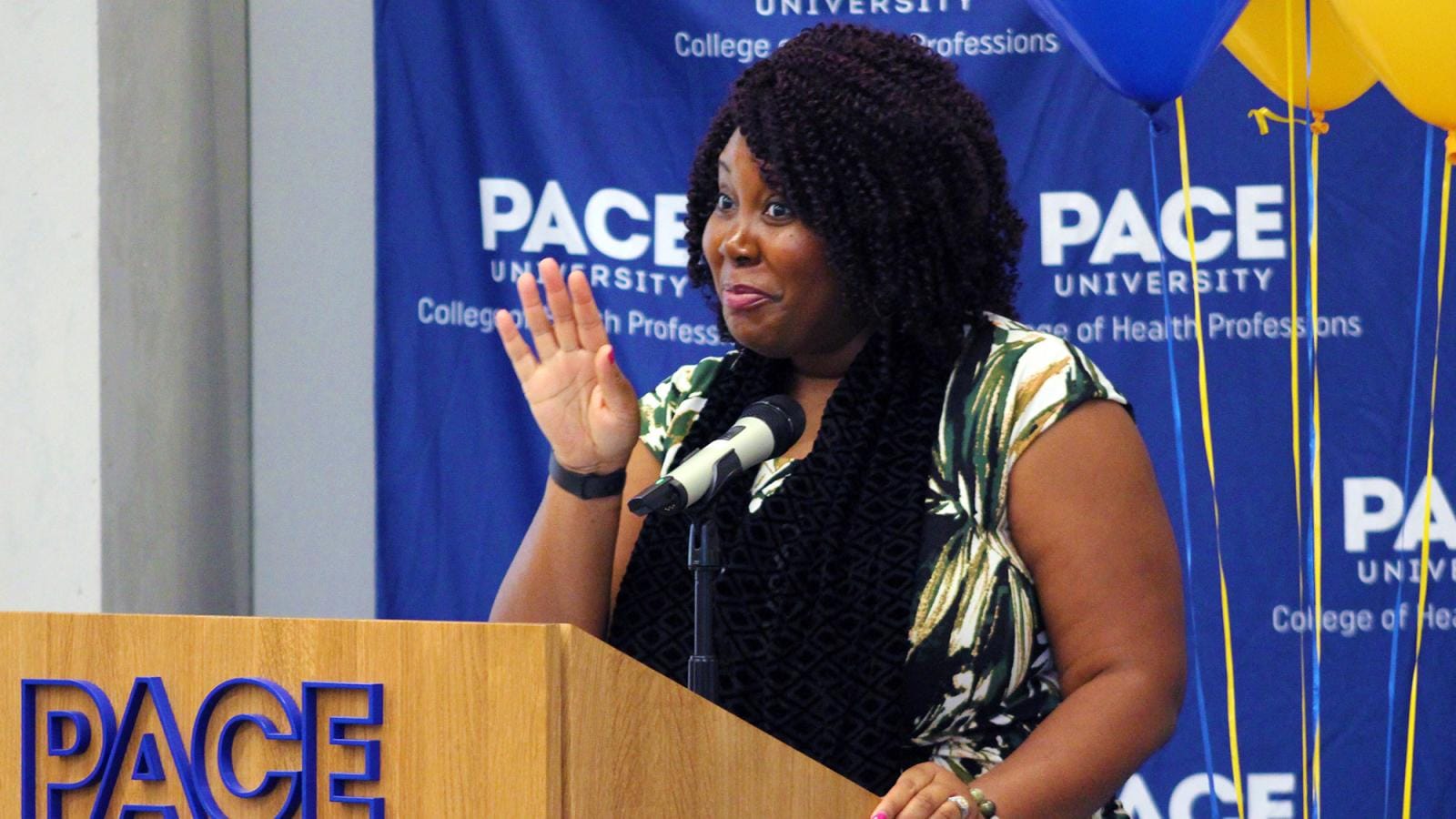
Kyomi Gregory‑Martin, PhD, CCC‑SLP
Associate Professor, Communication Sciences and Disorders Department
College of Health Professions
Currently on sabbatical, Dr. Kyomi Gregory‑Martin recently delivered a presentation titled “Person Centered Care and Ethical Consideration” for the Morris County Speech and Hearing Association on January 28, 2026. Her talk explored core principles of person‑centered practice and examined the ethical responsibilities that guide clinicians in providing equitable, compassionate, and evidence-aligned care.
More information about the event can be found here:
 MCSHA
MCSHA